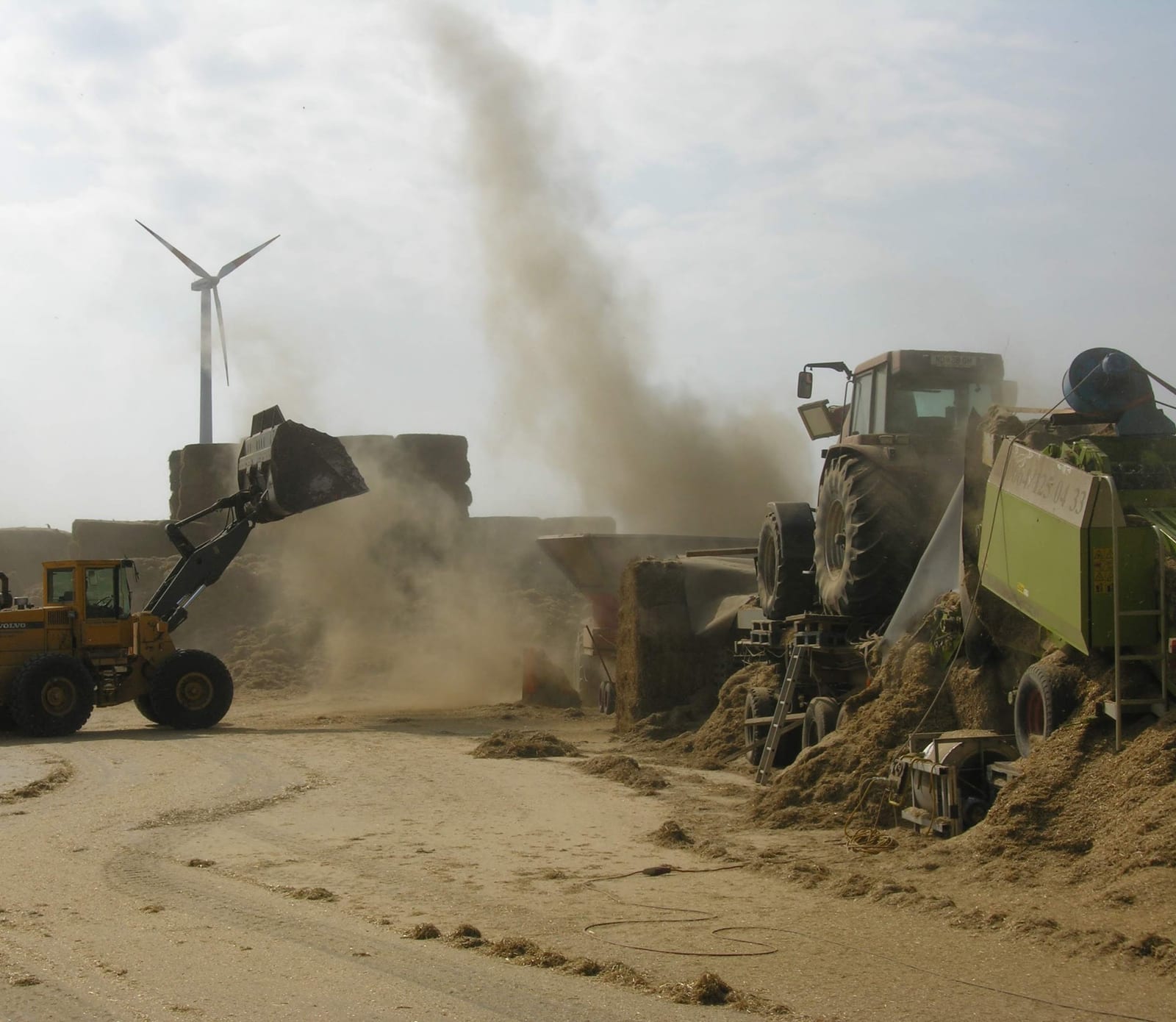
Storage & shelf life: how to keep your Manz straw good for a long time
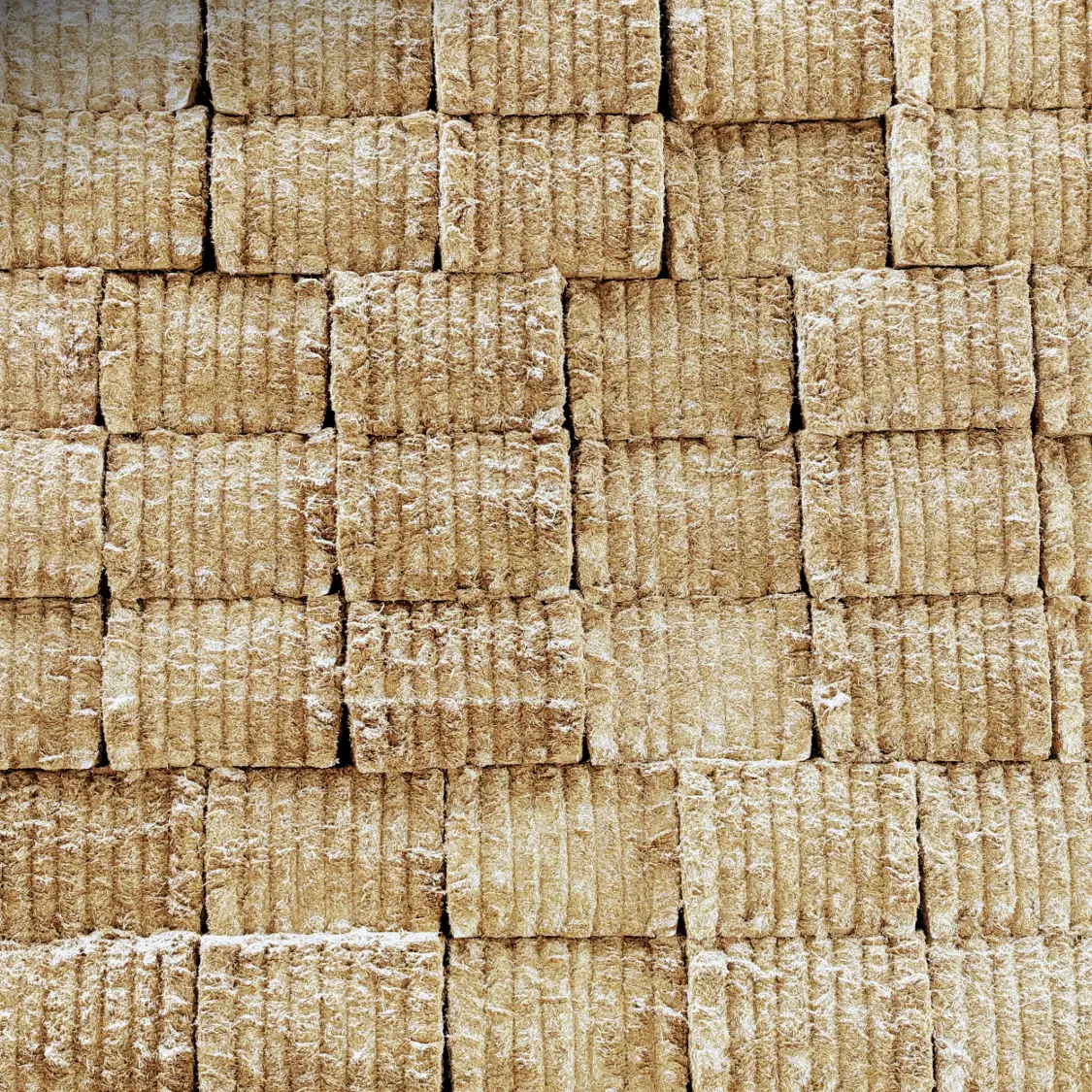
We keep getting asked how long our straw actually lasts and what to look out for when storing it. The short answer: stored correctly, Manz straw keeps for a very long time. The slightly longer answer – and why that is – you will find in this post.
Why moisture content is decisive
By far the most important factor for the shelf life of straw is moisture. If the moisture content is permanently above about 20 percent, microorganisms start to work in the bale – the straw goes mouldy, rots and in the worst case can even heat itself up. This was exactly one of the biggest sources of danger back when we still baled our straw the classic way in the field. That is why in production today we place particular emphasis on our straw always being dry: we do not dry our straw artificially, but from the start process only straw that is already dry – and check its quality several times throughout the entire production process.
How to store your Manz straw correctly
The good news: if our straw arrives at your place dry, most of the work is already done. A few simple basic rules are usually enough:
- Store dry and under cover: a shed, a hall or at least a weatherproof tarpaulin is a must.
- Never place directly on bare ground or concrete: moisture builds up underneath and rises into the bale. Pallets or another airy base create distance and let air circulate.
- Ensure sufficient air circulation: air should also reach the bales from the sides, instead of stacking everything tightly together and against the wall.
- Protect against condensation: strong temperature swings – for example a cold shed that heats up strongly during the day – promote condensation on the bales, on which mould then quickly forms.
How long does Manz straw keep?
Under these conditions – dry, airy, protected from moisture – straw stays practically unchanged for years. It is a natural product without an expiry date in the classic sense: as long as no water gets in, next to nothing happens. What matters is therefore less the age of the straw and above all how it is stored. A bale that has stood dry and airy for two years is, as a rule, in a much better condition than a bale that is only two weeks old but was stored damp and without air circulation.
What to do if you suspect mould?
If, despite all precautions, you ever discover a bale with mould: dispose of the whole bale. Mould spores spread throughout the entire bale, even if the infestation is only visible in one spot – such a bale is then no longer suitable as bedding, as the spores can be harmful to health for both animals and humans.
In short: we deliver the straw to you dry and dedusted – whether it then lasts a long time depends above all on correct storage at your farm.