Dust in the stable: why dedusted straw protects animals and people
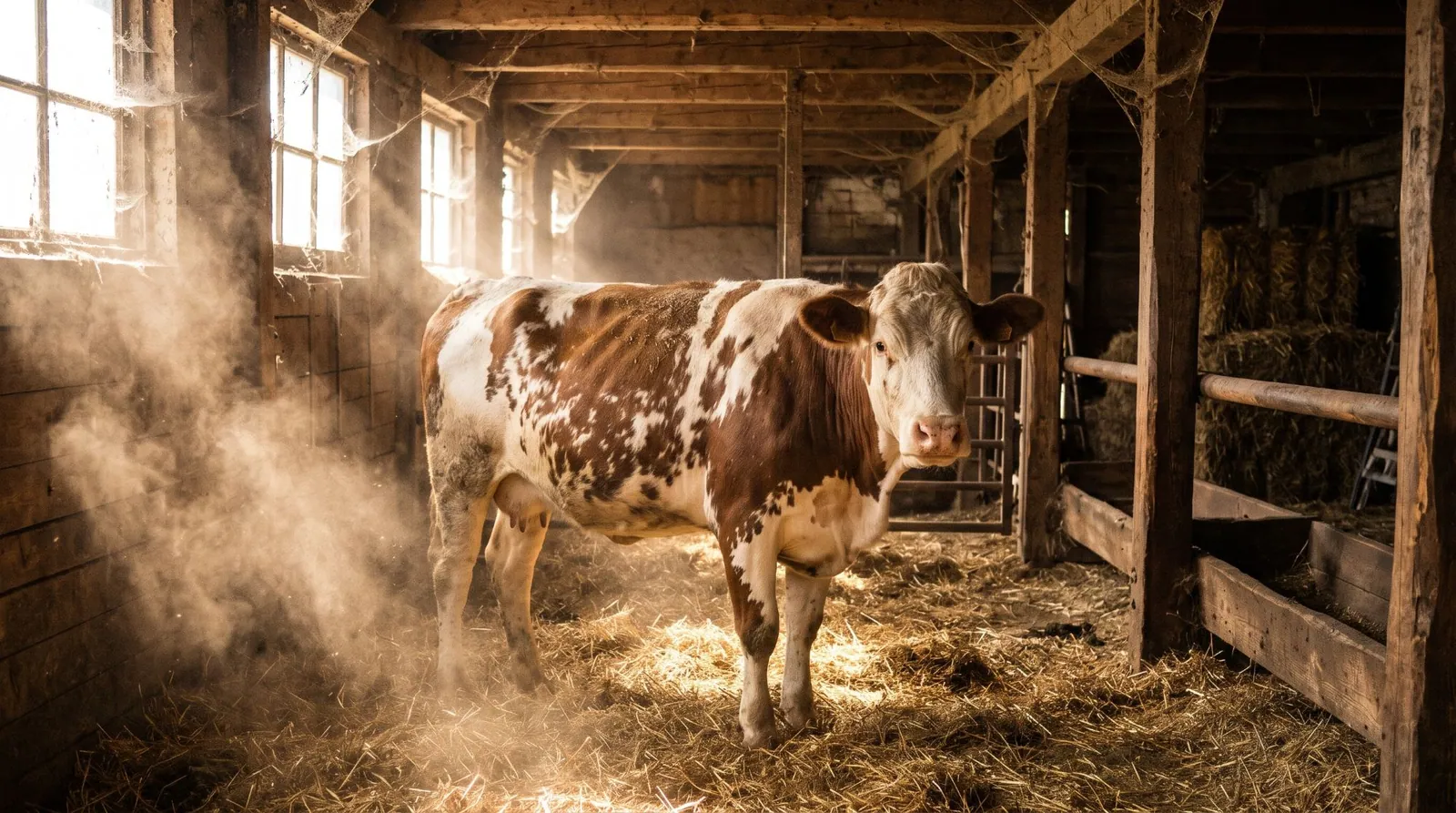
Anyone who has ever cut open a straw bale knows the cloud: dust rises, settles on everything and ends up in the lungs in the end. With the animals in the stable just as with the people who work there every day. This is exactly where we come in.
Where the dust comes from
Straw is a natural product. During threshing, baling and transport the stalks rub against each other, and soil, plant residues and fine abrasion from the field are added. The drier and more brittle the straw, the more of it ends up in the bale. Chopping also creates additional dust – which is why we dedust right in production.
Why dust is a problem in the stable
Fine dust irritates the airways. In closed stables animals breathe it in all day long, and farmers also get their share when bedding and mucking out. Low-dust bedding is therefore an important building block for a healthy stable climate on many farms.
The same goes for people: farmers are constantly exposed to dust at work. Dust carries germs and allergens, and the finer it is and the longer the exposure lasts, the greater the risk to the lungs. According to agrarheute, typical diseases include:
- Chronic bronchitis, the most common respiratory disease among farmers
- Bronchial asthma caused by lasting contact with irritating dusts
- Farmer's lung, an allergic reaction to mould spores and bacteria, for example in damp hay, straw or silage
- Threshers' fever (ODTS), triggered by bacterial endotoxins in the dust
The German social insurance for agriculture, forestry and horticulture (SVLFG) counts respiratory diseases among the most common occupational diseases in farming. According to the SVLFG, feed and bedding are often the main sources of dust in the stable. Very fine dust is particularly problematic: it hangs in the air for many hours and penetrates down to the alveoli. The longer and more intense the exposure, the greater the risk. Mould and bacteria also develop preferably under damp conditions in hay, straw or silage – one more reason to store straw dry.
And for dairy cows?
With dairy cows there is something more: dust and dirt in the stable can carry germs into the milking area and thus affect milk quality. Less dust in the bedding is therefore also a question of hygiene for dairy farms.
A recommendation by the Swiss research institute Agroscope (then ALP) on producing cheese-making milk fits this: to keep the milk as low as possible in butyric acid bacteria, the formation of dust and manure splashes should be avoided before and during milking. According to the leaflet, the germs only get into the milk during milking, for example via manure particles, objects or surfaces. Just a few dozen spores per litre can cause faulty fermentation in hard and semi-hard cheeses such as Gruyère or Emmental. The leaflet also names the cleanliness of cattle, lying areas and stables as a good basis.
What we take out of the straw
Depending on the variety and the raw material, we remove up to 15 % dust from the straw. That is 50 to 100 kilograms per bale that never even make it into the bale – and therefore not into your stable either. For this we do not rely on a single process, but on several methods that complement each other – the straw is up to 7-fold dedusted. We developed some of these processes ourselves, building on our experience, and have refined them step by step ever since.
The leaflet on evaluating dust at the workplace by the Austrian accident insurance AUVA names a clear order: first it is checked whether the dust-producing material can be replaced, for example by a dust-free alternative. Only then do further protective measures follow (STOP principle). Applied to bedding, this means: anyone who wants to avoid dust is best off starting right with the straw.
Which variety fits?
Depending on the farm and the animal species, a different variety fits:
- Chopped straw: already very well dedusted, the proven entry point.
- Fine straw: equally good dedusting, but shorter stalks and even more absorbency.
- Fine straw Premium: our lowest-dust straw with the lowest dust content in the range.
Who benefits most from especially low-dust straw
Especially low-dust straw is worthwhile above all for:
- Sensitive animals
- Stables where dust is already an issue
- Farmers who themselves react sensitively to stable dust
What our customers say
“Significantly less dusty, extremely absorbent and a consistently exact stalk length – compared to ordinary field-chopped straw, a huge difference in quality for our stalls.” – Pascal D. (horse farm)
“Because of chronic respiratory problems caused by stable dust I was close to giving up. The dedusted premium quality has completely changed the stable climate – an enormous relief for me as a farmer.” – Alexander M. (dairy farm)
Conclusion
Less dust in the straw means less dust in the air, in the stable and in the lungs. The best way to find out which variety suits your farm is to talk to your local dealer.
Matching products
More posts
Chopped straw vs. fine straw vs. premium – which type pays off when?
Fine straw is simply chopped straw chopped once more – with the same low dust content. We explain the differences between all three types and when each one pays off.
Storage & shelf life: how to keep your Manz straw good for a long time
Our straw leaves the farm already dedusted and bone dry. How long it stays that way, however, is only decided at your place – through storage. Here is what to look out for.
From an idea to a dealer network across half of Europe
How the wish to make life a little easier for farmers turned, over the years, into our own range and a dealer network across half of Europe.